Speech is a skill.
Practice it out loud.
An AI speech coach for online public speaking and presentation practice. Speak your answer, get a score and a coaching note on exactly what to say next time.
Result · salary negotiation · 0:42
“What number are you asking for, and how did you arrive at it?
Main feedback
Highlight
You cited real market data — that’s the right foundation.
Focus
You buried the number. Lead with $185k, then your reasoning.
Practice the conversations that don’t get a second take.
Each scenario is a short stack of pointed questions — the kind a real interviewer, manager, or investor would ask. Pick one and answer aloud.
 Salary negotiation
“What number are you asking for, and how did you arrive at it?
 Interview round
“Walk me through a project you led that didn't go to plan. What did you learn?
 Explain your work
“Explain cohort retention to a marketer who's never seen one. What's the 30-second version?
Three steps. Sixty seconds. One score.
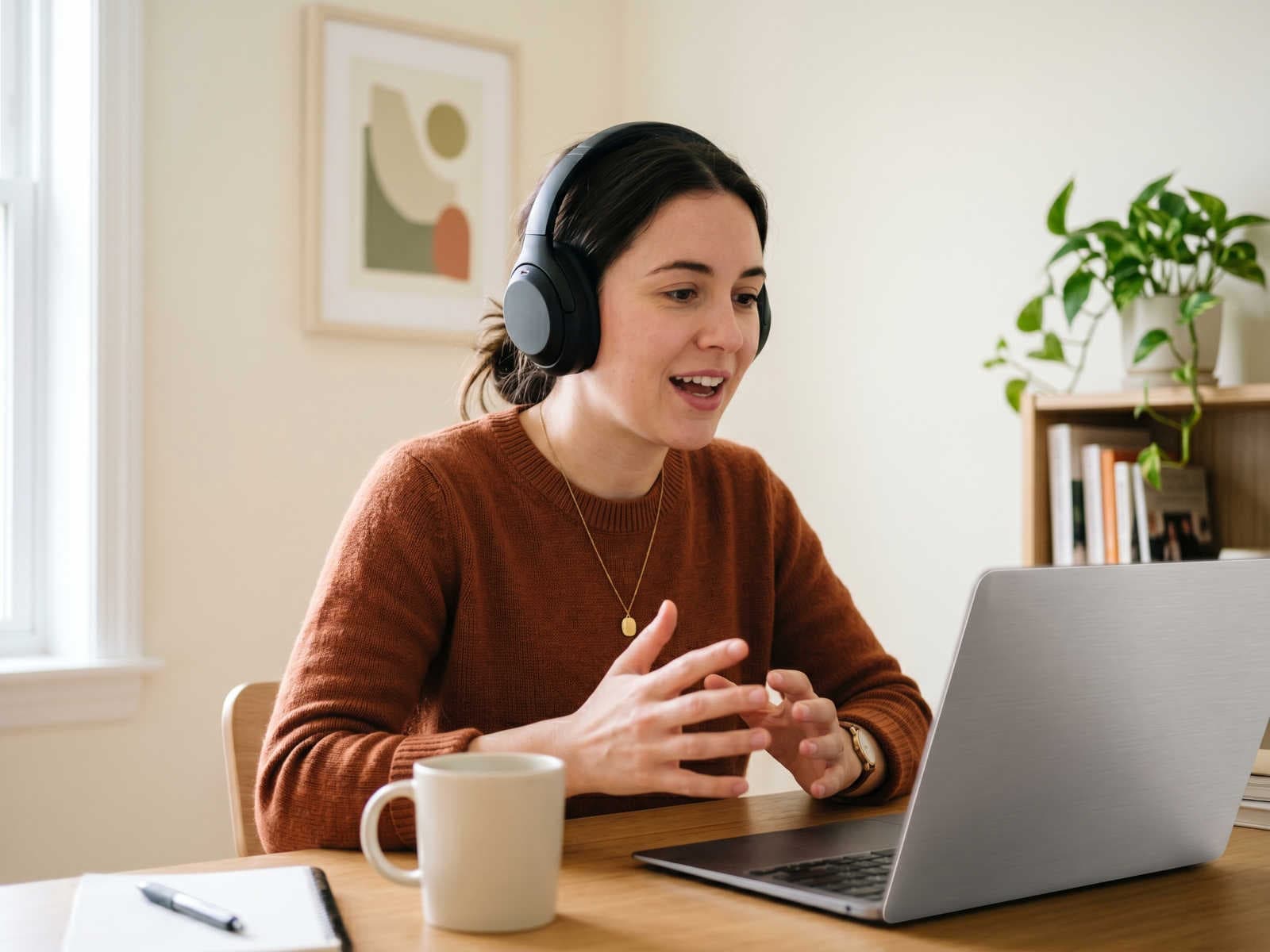
Speak it out loud.
Hit record and answer the question the way you'd say it in the room. A live sound meter confirms the mic's hearing you — no buffering, no transcript appearing word-by-word to distract you.
Why do you think you’re worth more than what they’ve offered?
Hear what you said.
Your recording plays back as a click-through audio timeline next to your transcript. Every 'um' is struck through and every weak phrase underlined — so the problems are in the page, not buried in a list.
Your recording
Get one direct note.
No two-paragraph essay, no vague advice. One sentence that names the move you should make next time — and a button to see it rewritten the way it should have landed.
You buried the number. Lead with $185k, then your reasoning — it’ll land as confidence instead of bargaining.
Another way to say itSo um based on the offers I’ve been seeing, I think maybe something around 185 would feel right. I’m coming in with three years of staff-level work and a competing offer at 192…
Public speaking best practices, backed by research.
- The production effect
Saying it helps it stick
Your brain remembers words much better when you speak them instead of just thinking them. The act of vocalizing locks them in your memory, making them much easier to recall.
- Deliberate practice
Fast feedback means faster growth
Vague advice delivered hours later won’t change your habits. To actually build a skill, you need specific corrections in the moment. The faster you know what to fix, the faster you’ll see improvements.
- Cognitive load
Practice will improve your delivery
When searching for words, recalling content, and managing nerves compete for attention, delivery suffers. Rehearsal reduces that competition — resulting in a smoother, more confident delivery.

“I just wanted to stop saying ‘um’. I tried it a few times the night before my meeting and what I said came out so naturally. Didn’t expect that.”
Practice public speaking online — common questions.
- What is the best way to practice public speaking online?
- The best online public speaking practice combines speaking out loud, hearing yourself back, and getting specific feedback on what to change. TalkPrep is built around that loop: pick a question, answer aloud for under a minute, and get a score plus one direct coaching note — no generic tips, no two-paragraph essay.
- Can an AI speech coach really replace a class or a coach?
- An AI speech coach won't replace a human for high-stakes keynote prep, but it beats a class for daily reps. You can practice speech online whenever you have 60 seconds, get filler-word and pacing feedback instantly, and run the same answer five times in a row — something no human coach has the patience for.
- What are the best practices for oral presentations?
- Public speaking best practices come down to four things: lead with your point, cut filler words ("um", "like", "I think maybe"), hold a pace around 140–160 words per minute, and rehearse out loud — not in your head. TalkPrep flags all four in your transcript so you can see exactly where you drift.
- Is this a public speaking practice app or a practice group?
- It's a public speaking practice app — solo, on demand, in your browser. If you've tried a public speaking practice group like Toastmasters and wanted something you could do at 11pm the night before a meeting, that's what this is for.
- What kind of presentation skills can I practice?
- Practice in presentation skills like salary negotiations, interview answers, explaining technical work to non-technical audiences, and investor pitches. Each scenario is a short stack of pointed questions you answer aloud — the kind of online presentation practice that maps to real conversations, not classroom exercises.